
Agriculture stands at a crossroads. With a global population projected to reach nearly 10 billion by 2050, the pressure to produce more food while using fewer resources has never been greater. At the same time, climate change, soil degradation, and water scarcity are reshaping what’s possible on farms around the world. The good news? Technology is rising to meet the challenge in ways that would have seemed like science fiction just a decade ago.
Sustainable agriculture technology isn’t just about swapping out old tools for new ones — it’s about fundamentally rethinking how we grow food. From AI-powered crop monitoring to gene-edited seeds that thrive in drought conditions, the innovations emerging right now have the potential to reshape global food systems for generations to come. This article explores where that technology stands today and, more importantly, where it’s headed.
The Current State of Sustainable Agriculture Technology
Before looking forward, it’s worth understanding where we are. Sustainable agriculture — broadly defined as farming practices that meet current food needs without compromising the ability of future generations to do the same — has evolved significantly over the past two decades. Early efforts focused primarily on reducing chemical inputs and improving soil health. Today, the scope is far wider.
Precision agriculture is already mainstream on large commercial farms in the United States. GPS-guided tractors, soil sensors, and variable-rate technology allow farmers to apply fertilizer, water, and pesticides only where they’re needed, cutting waste dramatically. According to the American Farm Bureau Federation, precision agriculture practices can reduce fertilizer use by up to 15% and pesticide use by up to 25%, while simultaneously improving yields.
But adoption isn’t uniform. Smallholder farmers — who produce roughly 70% of the world’s food supply — often lack access to these technologies due to cost barriers and limited infrastructure. This gap is one of the defining challenges of the next era of sustainable ag tech.
Emerging Technologies Reshaping How We Farm
Artificial Intelligence and Machine Learning
AI is quietly becoming one of the most powerful tools in modern agriculture. Machine learning algorithms can analyze satellite imagery, weather data, and historical yield records to predict crop performance, identify disease outbreaks before they spread, and recommend precise interventions. Companies like John Deere and startups alike are embedding AI into everything from planting decisions to harvest logistics.
One compelling application is predictive disease modeling. By training models on thousands of past outbreak patterns, AI systems can alert farmers days or even weeks before a fungal infection or pest infestation reaches visible levels. Early intervention at this stage is not only more effective — it’s also far less chemically intensive, which is a direct win for sustainability goals.
Robotics and Autonomous Machinery
Labor shortages in agriculture are a persistent and growing problem, particularly in fruit and vegetable production. Autonomous robots are increasingly stepping in to handle tasks that have historically required intensive human labor — things like weeding, pruning, harvesting, and even transplanting seedlings.
Small, targeted weeding robots like those developed by Carbon Robotics use laser technology to destroy weeds without any herbicide at all. These machines can cover dozens of acres per day with surgical precision, eliminating the need for broad-spectrum chemical treatments. The environmental implications are significant: reduced chemical runoff, healthier soil microbiomes, and lower input costs for farmers.
Larger autonomous tractors and harvesters are also advancing quickly. Unlike human operators who need breaks and work limited hours, autonomous machinery can operate around the clock during narrow planting and harvest windows — a practical advantage that directly supports yields and farm profitability.
Vertical Farming and Controlled Environment Agriculture
Vertical farming — growing crops in stacked indoor layers under artificial light — was once dismissed as an expensive niche. That perception is changing. As LED technology becomes more energy-efficient and the cost of automation drops, indoor agriculture is becoming economically viable for a broader range of crops.
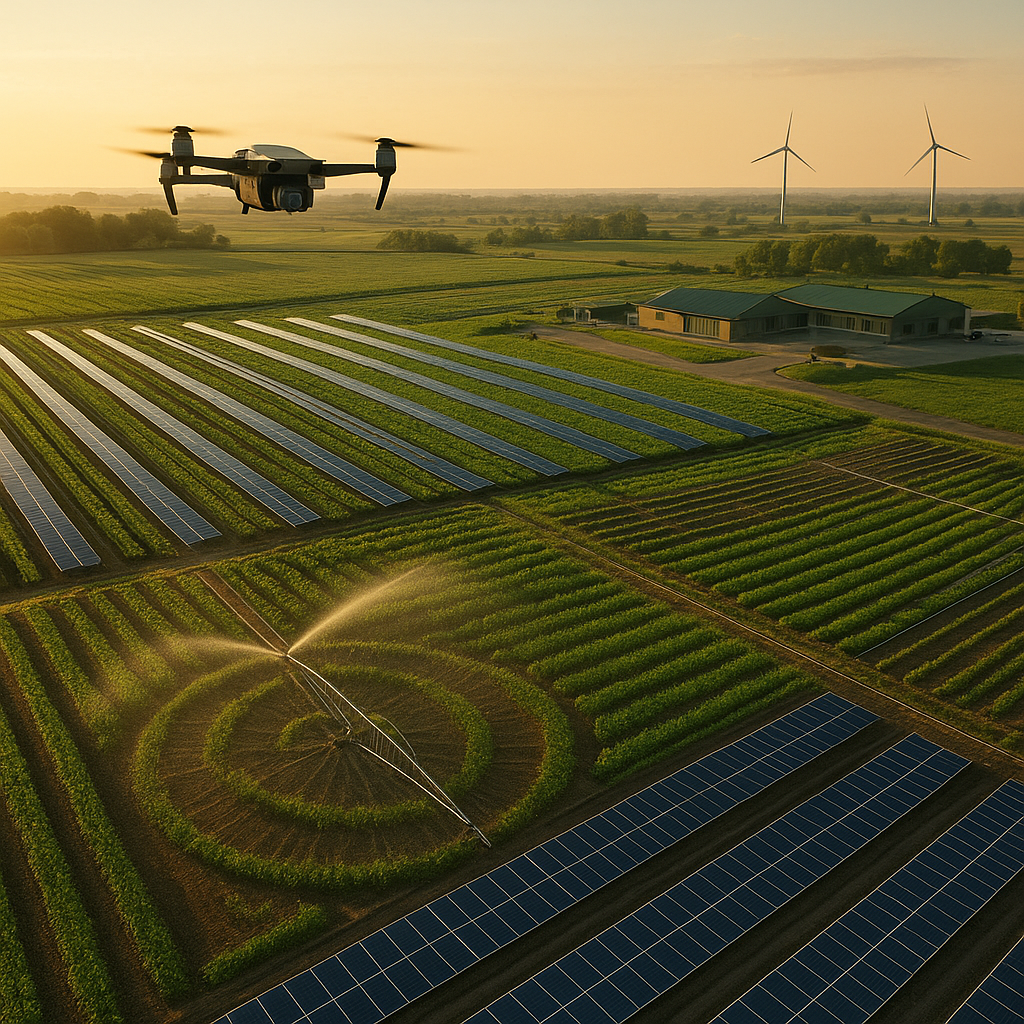
The sustainability case for vertical farming is compelling in specific contexts. These systems use up to 95% less water than conventional field agriculture, require no pesticides, and can be located close to urban consumers — dramatically cutting transportation emissions. For leafy greens, herbs, and some fruiting crops, the unit economics now compete with traditional greenhouse production in many markets.
The challenge remains energy consumption. Vertical farms rely heavily on artificial lighting, which makes their overall carbon footprint highly dependent on the energy grid they’re connected to. The integration of on-site renewable energy — particularly solar — is increasingly seen as the key to making indoor agriculture genuinely sustainable at scale.
The Role of Biotechnology in Sustainable Farming
Biotechnology is arguably the most controversial — and potentially the most impactful — category of sustainable agriculture technology. Gene editing tools like CRISPR-Cas9 have unlocked the ability to develop crop varieties with remarkable precision. Unlike older genetic modification techniques, CRISPR can make targeted changes to a plant’s existing genome without introducing foreign DNA, which has opened new regulatory and public acceptance pathways in several countries.
The practical applications are enormous. Researchers are developing wheat varieties resistant to drought, rice that can tolerate flooding, and tomatoes with extended shelf life that reduce food waste. In 2023, the USDA approved a CRISPR-edited soybean with improved oil composition — a milestone that signals growing regulatory comfort with the technology in the United States.
Biological inputs are another fast-growing biotechnology segment. Microbial inoculants — products containing beneficial bacteria and fungi — can enhance nutrient availability in soil, reduce the need for synthetic fertilizers, and boost plant resilience to stress. The global biological crop protection market is projected to grow at a compound annual growth rate of over 14% through 2030, reflecting both farmer interest and investor confidence.
Water Technology: The Sustainability Imperative
Agriculture accounts for approximately 70% of global freshwater withdrawals. As aquifers deplete and rainfall patterns grow more unpredictable, water management technology is moving to the center of the sustainable agriculture conversation.
Advanced drip irrigation systems, now integrated with real-time soil moisture sensors and weather forecasting, can reduce agricultural water use by 30–50% compared to flood irrigation. These systems are particularly impactful in arid regions of the American Southwest, parts of Africa, and South Asia, where water scarcity and agricultural demand are both highest.
Emerging technologies like atmospheric water generation — harvesting moisture directly from air — and treated wastewater recycling systems are also gaining traction as supplemental water sources for agriculture in water-stressed areas. While still relatively nascent, these approaches reflect the broader push to decouple food production from dependence on any single, increasingly unreliable water source.
Data, Connectivity, and the Digital Farm
One of the less visible but deeply transformative trends in sustainable agriculture is the explosion of farm data. Modern farms equipped with IoT sensors, drones, and connected machinery generate enormous volumes of information — soil pH, canopy temperature, equipment performance, yield maps, and more. The challenge is turning that data into actionable decisions.
Farm management software platforms are maturing rapidly, offering integrated dashboards that allow farmers to monitor operations, track input use, and benchmark performance against similar operations. When used well, these tools support genuinely data-driven decisions that reduce waste, optimize timing, and improve profitability — all of which align with sustainability goals.
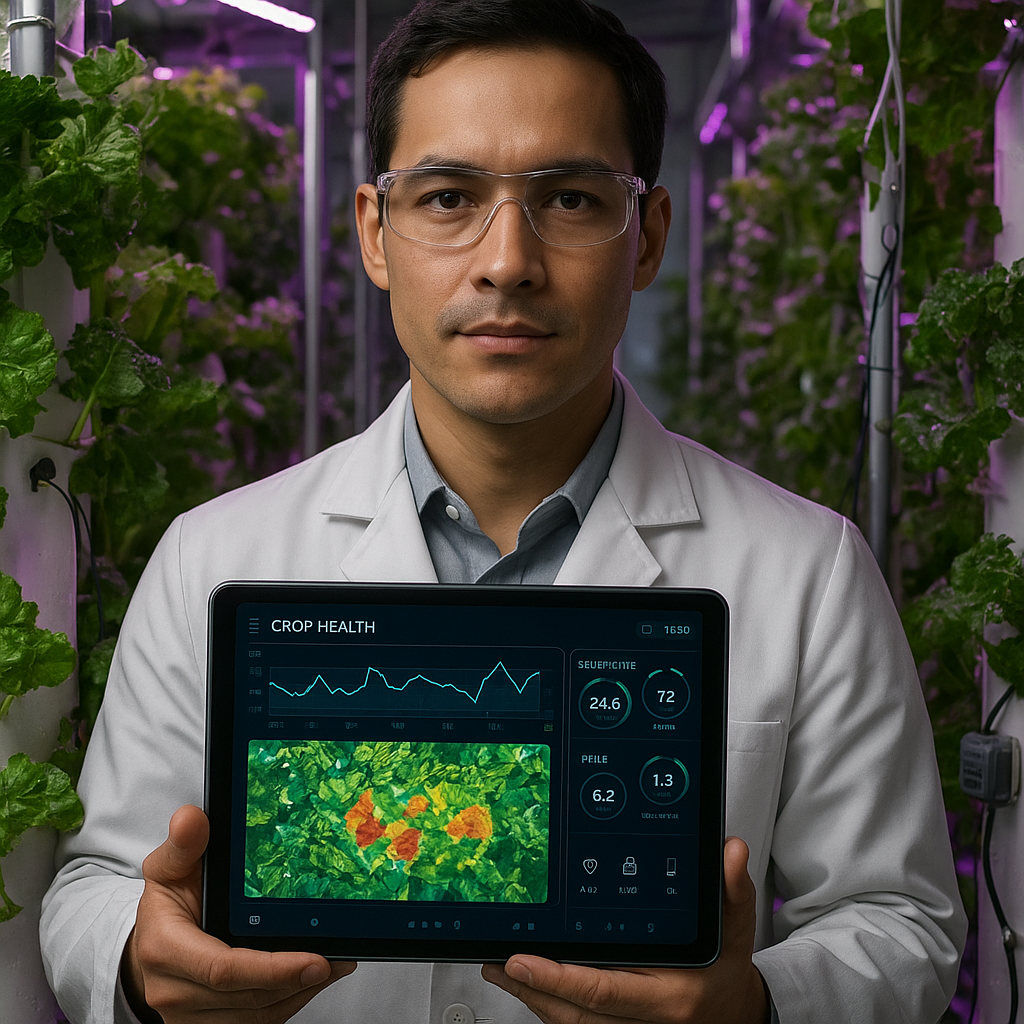
Connectivity remains a barrier in many rural areas. The expansion of rural broadband infrastructure and low-orbit satellite internet services like Starlink is gradually addressing this gap, with meaningful implications for technology adoption among farmers who previously lacked reliable internet access.
Funding and Scaling Sustainable Agriculture Technology
Innovation means little if it stays in the lab or remains accessible only to large commercial operations. Scaling sustainable agriculture technology requires investment, policy support, and business model innovation.
Agtech investment reached record levels in the early 2020s, with billions of dollars flowing into precision agriculture, alternative proteins, and controlled environment agriculture. While the investment pace moderated somewhat through 2023 and 2024 as broader venture markets cooled, the fundamental interest in food systems technology remains strong.
Government programs play a meaningful role as well. In the United States, USDA programs like the Environmental Quality Incentives Program (EQIP) provide cost-share funding to help farmers adopt conservation-oriented technologies and practices. The Inflation Reduction Act of 2022 directed significant additional resources toward agricultural conservation, creating new pathways for farmers to invest in sustainable practices with financial support.
For smallholder farmers globally, pay-per-use and subscription models for technology access — rather than requiring large upfront capital investments — are proving to be more viable adoption pathways. Digital advisory services delivered via mobile phone are already reaching millions of smallholder farmers in sub-Saharan Africa and South Asia with agronomic guidance that was previously inaccessible.
What Does the Future Actually Look Like?
Looking ahead, several converging trends point toward a future where sustainable and productive agriculture are increasingly compatible rather than in tension. Key developments to watch include:
- Regenerative agriculture at scale: The integration of technology with regenerative practices — cover cropping, reduced tillage, livestock integration — is gaining momentum as carbon markets and consumer demand incentivize soil health investment.
- AI-driven crop breeding: Machine learning is dramatically accelerating plant breeding timelines, compressing what once took decades of field trials into years of computational modeling and targeted testing.
- Alternative proteins and precision fermentation: While not traditional farming, cultivated meat and fermentation-based protein production represent a technological reshaping of food systems with significant land and water use implications.
- Integrated pest management 2.0: Combining biological controls, AI-driven monitoring, and targeted interventions promises a future where chemical pest management is a last resort rather than a default tool.
- Space and remote sensing: Satellite constellations designed specifically for agricultural monitoring are delivering more frequent and higher-resolution imagery, enabling farm-level decision-making at a global scale.
Conclusion
The next chapter of sustainable agriculture technology is being written right now — in research labs, startup offices, university fields, and on farms that are quietly testing what’s possible. What’s clear is that the trajectory points toward farming systems that are simultaneously more productive, more resource-efficient, and more resilient to climate disruption than anything that came before.
The path forward isn’t without obstacles. Equitable access to technology, data privacy concerns, regulatory frameworks that keep pace with innovation, and the need for genuine integration with local farming knowledge are all challenges that require ongoing attention. But the tools available today — and those emerging on the near horizon — offer genuine grounds for optimism about agriculture’s ability to feed a growing world without exhausting the planet in the process.
Understanding these technologies, their limitations, and the conditions under which they can be most effectively deployed is essential for anyone engaged in the future of food and farming — whether as a grower, policymaker, investor, or simply a curious consumer who eats.